Sydney Borek
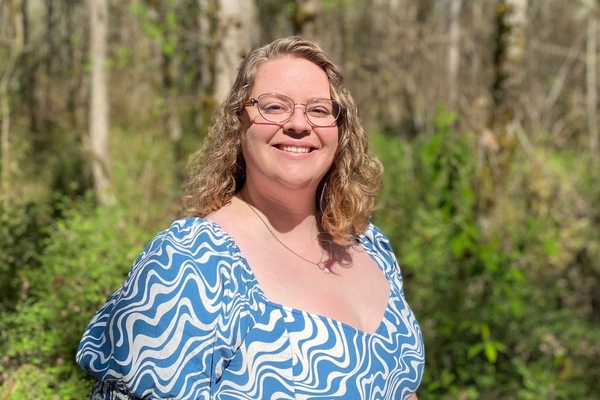
This month, get to know Sydney Borek, a local project manager with Citizen Engineers, and a volunteer with Beaverton’s Community Emergency Response Team.
Can you briefly tell us a bit about yourself and your role in local transportation?
I have been in the transportation planning and engineering industry for just over six years, and have worked at a few local transportation consulting agencies. I love working on a variety of different projects, including TSMO/ITS, fiber planning and design, and active transportation planning, all with an equity and accessibility lens.
What is Beaverton’s Community Emergency Response Team (CERT), and what does your role as a volunteer look like?
CERT is a FEMA program used by municipalities all over the country to learn, practice, and promote emergency preparedness and resiliency in their communities. CERT members are trained to safely respond to an emergency on the family, neighborhood, and community level, and can provide assistance when first responders are unavailable. I have only recently begun my training to be a Beaverton CERT volunteer, after years of wanting to join! I’m nearing the end of my training and hope to graduate as a full-fledged member in late October.
What inspired you to join Beaverton’s CERT program, or was there a specific moment that made you sign up?
There are a combination of reasons why I wanted to join the CERT program! Firstly, my grandparents volunteered with Habitat for Humanity in Louisiana after Hurricane Katrina, and I always looked up to them for doing that. When I came to OSU for college, I learned about the Cascadia Subduction Zone and the physical and emotional damage that will occur when the disaster occurs. Then, I moved to Beaverton in 2022 and saw CERT advertised in local agency materials and decided once I passed my PE exam, I’d sign up.
What are a few simple, practical steps you recommend for families looking to get better prepared at home?
Preparing for an emergency can be instantly overwhelming when it comes to gathering materials and creating a plan. A few things I recommend to start with:
- Enough water for your family (including pets!) for three days, for drinking, cooking, and hygiene. Each person/pet needs 1 gallon of water per day. So if you are a family of three with a dog, it is recommended to have 12 gallons of water on hand.
- Determine an out-of-state contact. When emergencies occur, local communications may be difficult. However, it may be easier to contact someone who is in a different city or state and use them as a go-between for you and your family, if you’re separated or want to share information with others.
- Acquire and learn to use at least one fire extinguisher (preferably a couple). If a fire is to occur, a fire extinguisher may not be successful in putting out the fire, but will help get you and your family out of your home to call the fire department. It would be useful to practice using one in a safe scenario! CERT provided an opportunity, but you may also contact your local fire department for practice.
Does your CERT volunteering impact how you approach your career in transportation?
It absolutely has. It has made me think even more about the resiliency of our transportation system and the importance of coordination and collaboration between local agencies. Also, knowing your neighbors and the importance of community when preparing local transportation (and emergency response) plans!