WTS Philadelphia Scholarship: Student Spotlights: E'llecse Logan
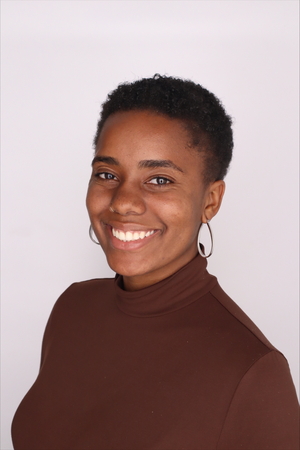
WTS Philadelphia proudly awards scholarships to outstanding students from high school through graduate school who are passionate about pursuing careers in transportation. These highly competitive awards recognize students for their academic excellence, leadership, and commitment to advancing the future of transportation. This year, we awarded a total of $25,000 in scholarships to support and celebrate the next generation of transportation leaders and innovators.
E'llecse Logan
University of Pennsylvania
WTS Philadelphia Ally and Inclusion Scholarship
E’llecse is an incoming second-year master’s student in the Weitzman School of Design at the University of Pennsylvania. She graduated from the University of California, Santa Barbara, with a Bachelor of Science in Environmental Studies, an emphasis in Restoration Ecology, and a minor in Black Studies. After graduating, E’llecse worked in student housing where she empowered students and advanced her department’s commitment to equity. Volunteer work with the U.S. Green Building Corps of Los Angeles, Channel Islands Restoration, and Alliance for the Chesapeake Bay kept her connected to the environmental field. After living in Washington, D.C., E’llecse was positively radicalized by the efficiency and convenience of public transportation. Her current studies center on community development and environmental planning. She also serves as a co-president for Weitzman's Black Designers' Society and looks forward to supporting her fellow graduate students as Deputy Director of Credentials in Penn's Graduate and Professional Student Assembly. E’llecse looks forward to charting an innovative and empowering career path, integrating the natural and built environments, and advocating for public transportation.
In her own words, E’llecse shares more about her journey and goals:
- What inspired you to pursue your current field of study or career path?
There were a number of paths that converged to bring me to planning school with the goal of becoming a city planner. I studied restoration ecology in undergrad, coming to see the study and practice as not just about restoring ecological systems, but also our connection to the earth and to each other through the availability and maintenance of public lands. I also worked in residence life in higher ed for six years, falling in love with community building and curating experiences that bring people together. I also moved around a few times, seeing how the character of people and places mutually shaped one another. Finally, I had the privilege of living in a few walkable communities—first, Isla Vista, CA, a true college town one small access road across from my alma mater UC Santa Barbara, a place that embodied the 15-minute city concept (through it was more like 10 minutes, just walking); then, Washington, D.C., where I fell in love with public transit and found my diabetes more manageable with my walkable lifestyle.
All these things came together to embody the opportunities and the impediments that exist within cities. Planning is a practical field in which I get to empower communities to dream bigger than they've known, to inspire belonging where they live, to restore their connection to the land and the people around them.
- What does receiving this scholarship mean to you?
Receiving this scholarship was meaningful to me. It felt like recognition not only of my own experiences as a working woman—especially as I've recently begun my first internship—but also of the many people whose hard work, support, and example have shaped my life.
I'm grateful that my essay resonated with the selection committee. At its core, it reflected values that matter greatly to me: dignity, compassion, and a responsibility to care for one another. It means a lot to me that my essay was recognized and, to some degree, that those values and sentiments were shared because I think they're important—especially now, but they're also timeless. No matter the external conditions, we all have a responsibility of nurture toward one another, and we all have the capacity for it.
- Why do you think transportation is important to communities?
Few things embody the concept of freedom more than transportation, the ability to move when and as you please. Well-planned transportation keeps communities alive, flowing and growing. Beyond the obvious economic needs, I think what's often overlooked is transportation's importance to community health. It wasn't until I moved to Washington, D.C., and periodically returned to my hometown in California that I noticed the difference in impact on my blood sugar. Managing my diabetes was easier in D.C. because it required a more active lifestyle; it was also cheaper, less insulin!
Beyond medical health, transportation is also critical for the social health of communities. Polite smiles, short conversations, small acts of kindness like offering one's seat, helping get someone's walker up the trolley steps, or instructing newcomers to step down to open the back trolley doors are ways we reinforce social connections and build or maintain community.